The details in the article.
Paraguay aims for industrial growth by strengthening traditional sectors and attracting investment, focusing on textiles, maquila, and human capital.
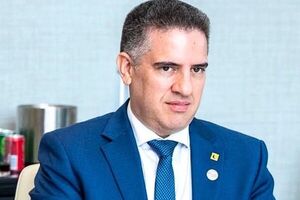
The industrialization process in Paraguay requires strengthening traditional productive sectors as a fundamental step toward adopting advanced technologies, according to Deputy Minister of Industry Marco Riquelme. This approach, supported by public policies aimed at promoting industrial investment, forms the core strategy of the Ministry of Industry and Commerce (MIC) to transform the country’s productive matrix. The government’s vision focuses on a gradual development model, consolidating sectors with immediate potential while preparing the groundwork for more technically complex...
The textile industry stands out as a priority sector within this strategy due to its capacity to generate numerous jobs and Paraguay’s competitive potential in this field. Deputy Minister Riquelme highlighted the country’s comparative advantages, such as low energy costs, availability of raw materials, and strategic location, positioning Paraguay as a regional textile production hub. This sector is already experiencing sustained growth and could serve as a model for the expansion of other manufacturing industries that add value to the country’s natural resources.
The maquila regime represents another essential tool in Paraguay’s industrialization strategy. This system allows foreign companies to produce within national territory under significant tax advantages, effectively generating thousands of formal jobs. According to Riquelme, the maquila mechanism could be a key driver for consolidating national industry, particularly in sectors such as automotive production and electronics manufacturing. The experience gained through this regime provides valuable insights into attracting foreign direct investment aimed at industrial production with export...
Leer la nota completa en Resumen de Noticias